cync8 vs Odoo / ERPNext: Full ERP or SMB-Simple Operations Layer?
Odoo and ERPNext are genuinely powerful, flexible platforms — and that's exactly why they usually need real implementation effort. For a 10-100 person distribution business without a dedicated IT team, that's a different kind of decision than adding a layer around the Tally setup you already run.
Direct answer: Odoo and ERPNext are full ERPs — broader in scope than cync8, but typically requiring configuration, customization and often an implementation partner to get right. Both usually mean moving accounting off Tally rather than connecting to it. cync8 is narrower by design: built specifically around the Tally setup you already run, deployable without a dedicated IT team.
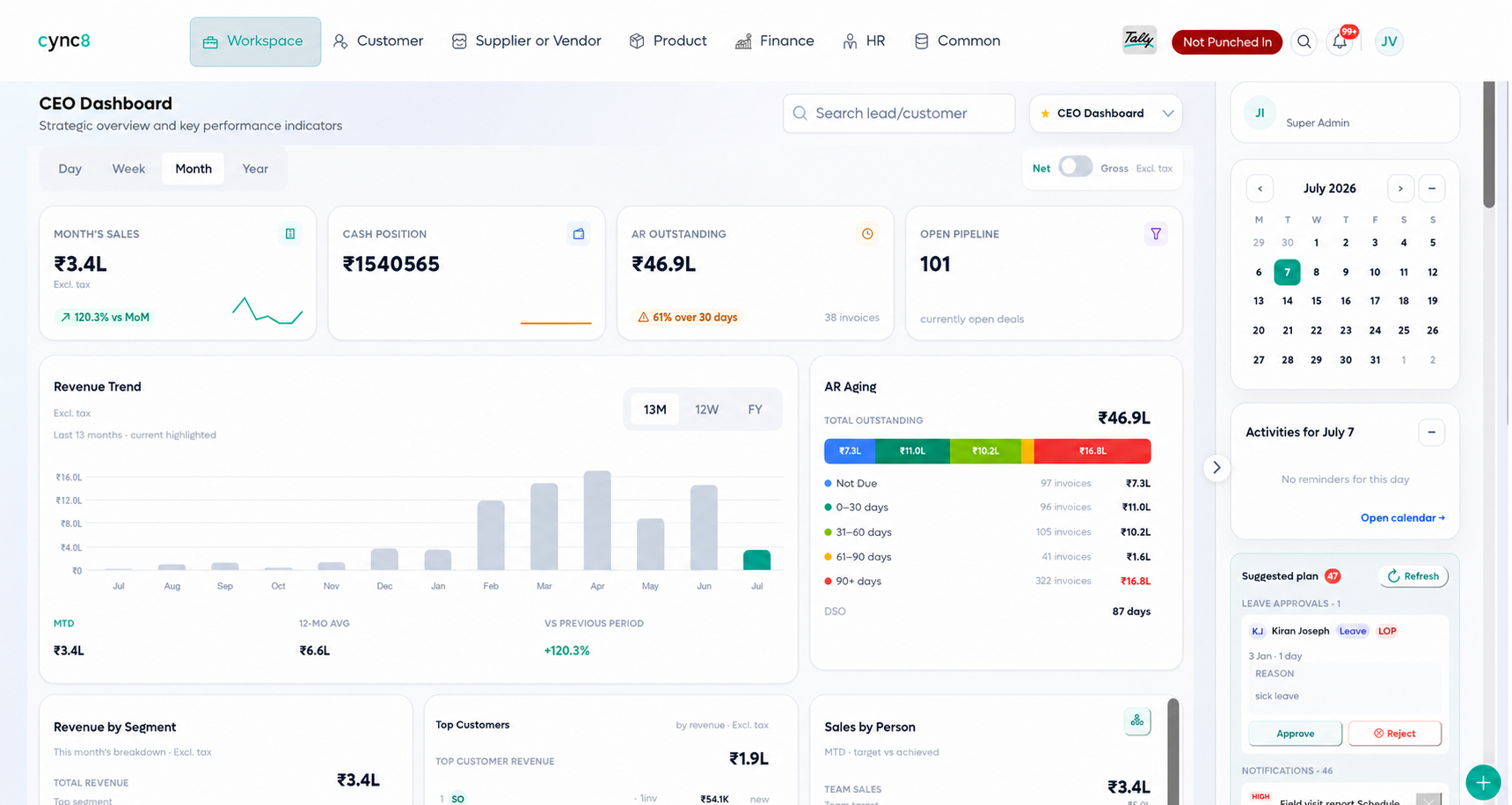
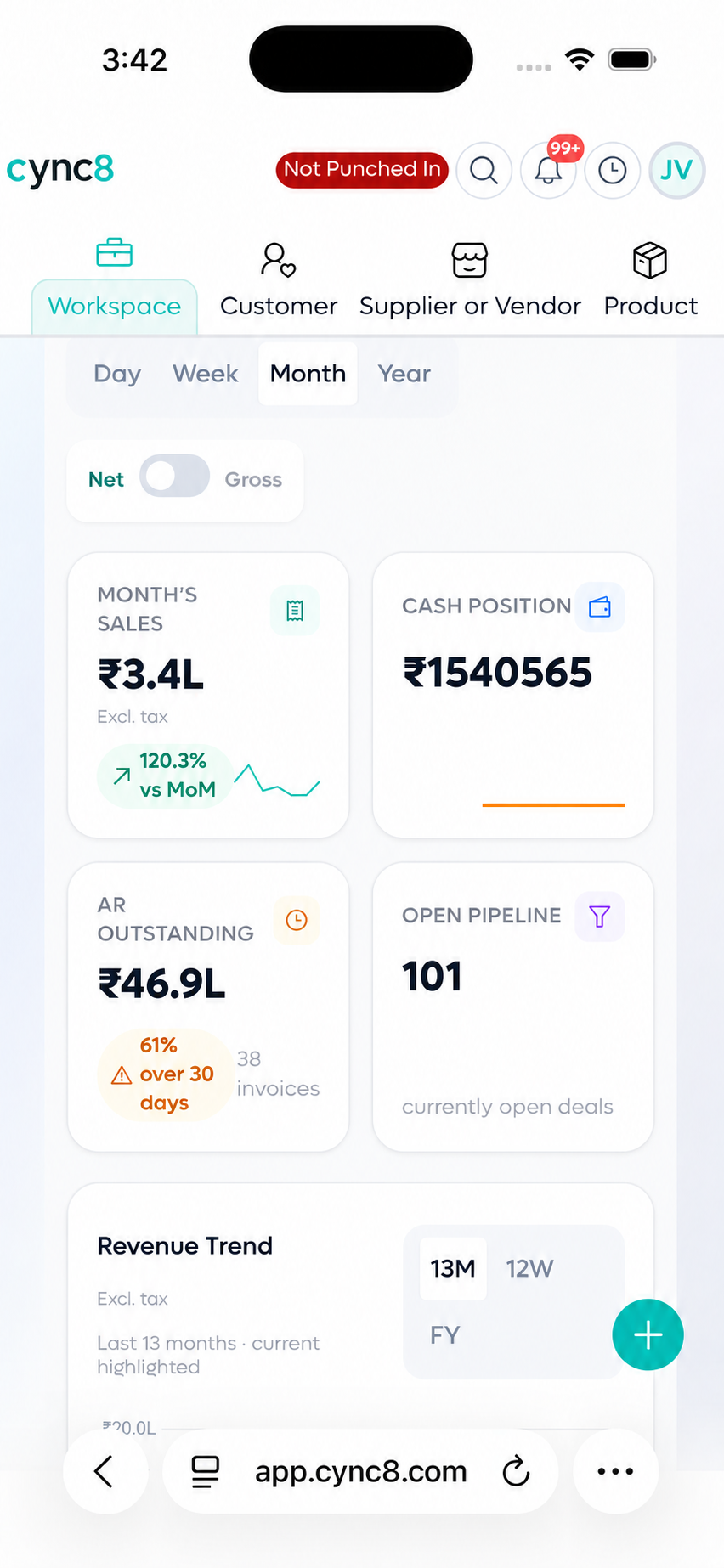
Where the two are actually different
| What you need | Odoo / ERPNext | cync8 |
|---|---|---|
| Scope | Full, custom ERPBroad, highly configurable platform | Focused operations layerBuilt for Tally-using trading SMBs |
| Tally relationship | Typically replaces TallyOwn accounting module takes over | Tally stays the backboneNative two-way sync, not a replacement |
| Implementation | Configuration-heavyOften needs an implementation partner | Fast deploymentNo dedicated IT team required |
| IT dependency | HigherOngoing admin/customization capacity needed | LowerDesigned for owner-led teams |
| Field force | General, availableNot distribution-specific | Mobile-first, GPS-taggedBuilt around distribution field visits |
Checklist: what to actually check before choosing
- Are you prepared to move accounting off Tally? A full ERP usually means this; cync8 doesn't ask you to.
- Do you have IT/implementation capacity — in-house or a partner — for setup and ongoing customization?
- Workflow coverage — inquiry to payment, not just one module.
- Inventory tied to sales, with reorder alerts.
- Field force built mobile-first, not bolted on.
- Realistic time-to-value — weeks vs. months, given your team's actual capacity.
This is the same checklist used in our Tally + CRM Checklist for Indian Distributors — use it against any platform you're evaluating, cync8 included.
Where cync8 fits
cync8 is built for owner-led trading and distribution businesses in India and the GCC that want stronger operational control without an ERP-scale implementation project. Tally stays the accounting backbone; cync8 adds CRM, inventory, field work and owner dashboards around it, connectable in hours rather than a multi-month rollout.
Current India annual-offer pricing starts at ≈ ₹30/user/day for Starter (minimum 5 users, ₹63,000 upfront for 14 months of access); Growth, which includes Tally sync, is ≈ ₹49/user/day (minimum 10 users, ₹2,10,000 upfront for 14 months of access). See current pricing for the full breakdown.
FAQ
Do Odoo or ERPNext replace Tally?
Typically yes — both have their own accounting modules, so adopting one usually means moving accounting off Tally rather than connecting to it.
Why would a small distribution business avoid a full ERP?
Flexibility usually comes with real implementation effort — configuration, customization, and often an implementation partner or in-house IT capacity most 10-100 person distribution businesses don't have. cync8 is built to deploy fast around the Tally setup a business already runs.
Is cync8 as powerful as Odoo or ERPNext?
Not in the same way — both are broader, more customizable platforms. cync8 is deliberately narrower: built specifically for Tally-using Indian trading and distribution SMBs, trading platform breadth for fast, low-effort deployment.